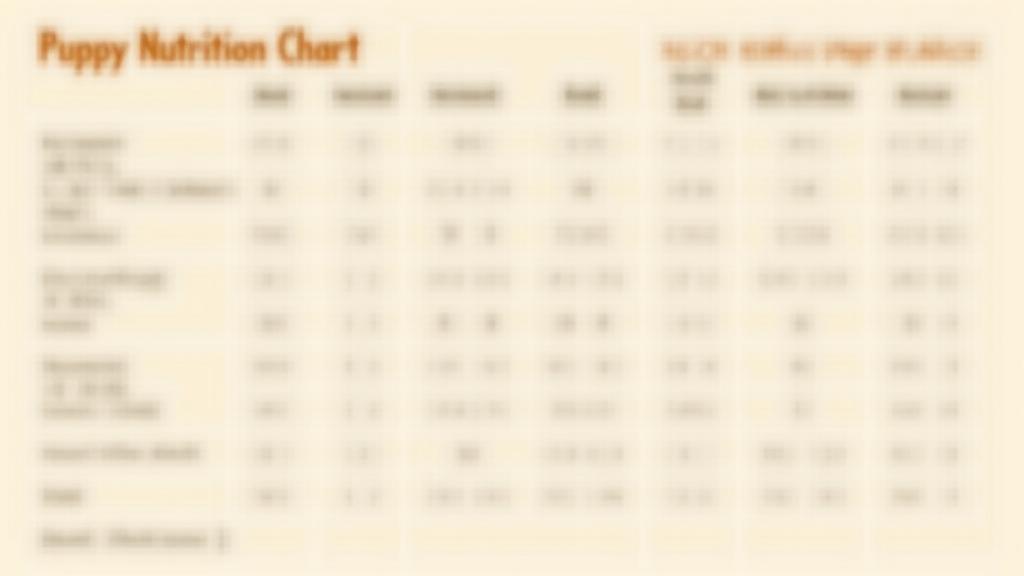
A puppy nutrition chart is a starting point to help determine how much dry kibble to feed a growing dog. Because every puppy is different, always consult the feeding chart on your specific brand of puppy food and follow your veterinarian’s advice.
Key Feeding Guidelines
- Feeding Schedule by Age
- Under 3 months: 4–5 meals per day - 3–6 months: 3 meals per day - After 6 months: 2–3 meals per day, gradually transitioning to twice daily - Portion Sizes depend on a puppy’s current weight, breed size, and the calorie density of the food. Weigh your puppy weekly and compare to breed‑appropriate weight charts, adjusting food intake to achieve a steady growth rate. For bottle‑fed puppies, a general guideline is roughly 20–26 kcal per 100 g of body weight daily, with a comfortable stomach capacity of about 4 ml per 100 g body weight.
- Nutrient Requirements
- High‑quality protein for muscle development - Fat and carbohydrates for energy - Calcium and phosphorus, with careful regulation between 2 and 4 months, to support developing teeth and bones - Vitamin D to aid calcium absorption - DHA (docosahexaenoic acid) for healthy brain and vision development - Large‑breed puppies benefit from size‑specific formulas that control calcium and calorie levels to avoid excessive growth rates, which can lead to joint issues. Large and giant breeds may need puppy food until 18–24 months.
- Transitioning to Adult Food should occur gradually over 7–10 days when the puppy reaches maturity:
- Small/medium breeds: around 9–12 months - Large/giant breeds: closer to 18–24 months ## Reference Table: Key Terms in Puppy Nutrition
| Term | Definition | Source / Example |
|---|---|---|
| Complete and balanced puppy food | A diet formulated to meet the nutritional levels established by AAFCO for growth and reproduction | Look for a “complete and balanced” statement on the label |
| DHA | An omega‑3 fatty acid that supports brain and vision development in puppies | Purina notes DHA is a key ingredient in many puppy foods |
| Calcium and phosphorus | Two minerals essential for strong bones and teeth; the ratio must be carefully controlled, especially in large‑breed puppies | Royal Canin states that between 2–4 months, puppies require regulated amounts of these minerals |
| Large‑breed puppy food | A formula with adjusted calorie and calcium levels to promote slow, steady growth and reduce the risk of orthopedic problems | Feed large‑breed puppy food until 18–24 months of age |
| kcal (kilocalorie) | A unit of energy commonly used to measure the calorie content of pet food | Puppy energy requirement: ~20–26 kcal per 100 g body weight daily (for bottle‑fed puppies) |
| Weaning | The process of transitioning a puppy from mother’s milk to solid food, usually beginning at 3–4 weeks | Start by mixing puppy food with water or milk replacer |
| Body condition score (BCS) | A visual and tactile assessment of a dog’s fat cover; used to adjust portions | A veterinarian can help evaluate your puppy’s BCS |
Practical Takeaways
- Start with the package chart – The feeding guide on your puppy food bag is a reliable baseline.
- Weigh weekly – Track weight on a breed‑appropriate growth chart and adjust portions accordingly.
- Feed age‑appropriate meals – Use the schedule above and stay consistent.
- Choose a complete and balanced puppy food – Look for AAFCO statements and, for large breeds, a large‑breed formula.
- Consult your veterinarian – Your vet can help tailor the chart to your puppy’s unique needs.
- Purina – How Much to Feed a Puppy? Puppy Feeding Chart & Guide
- Chewy – Puppy Feeding Guide
- AKC – Puppy Food & Nutrition (PDF)
- Royal Canin – Puppy Feeding & Nutrition
- Maddie’s Fund – Puppy Bottle Feeding and Stomach Capacity Chart
- PetMD – Dog Feeding Chart
- Cainhoy Vet – Puppy Feeding Guide
- VCA Hospitals – Nutrition – General Feeding Guidelines for Dogs
This article is based on desk research from veterinary sources and expert feeding guidelines. It does not reflect hands‑on testing by the author.